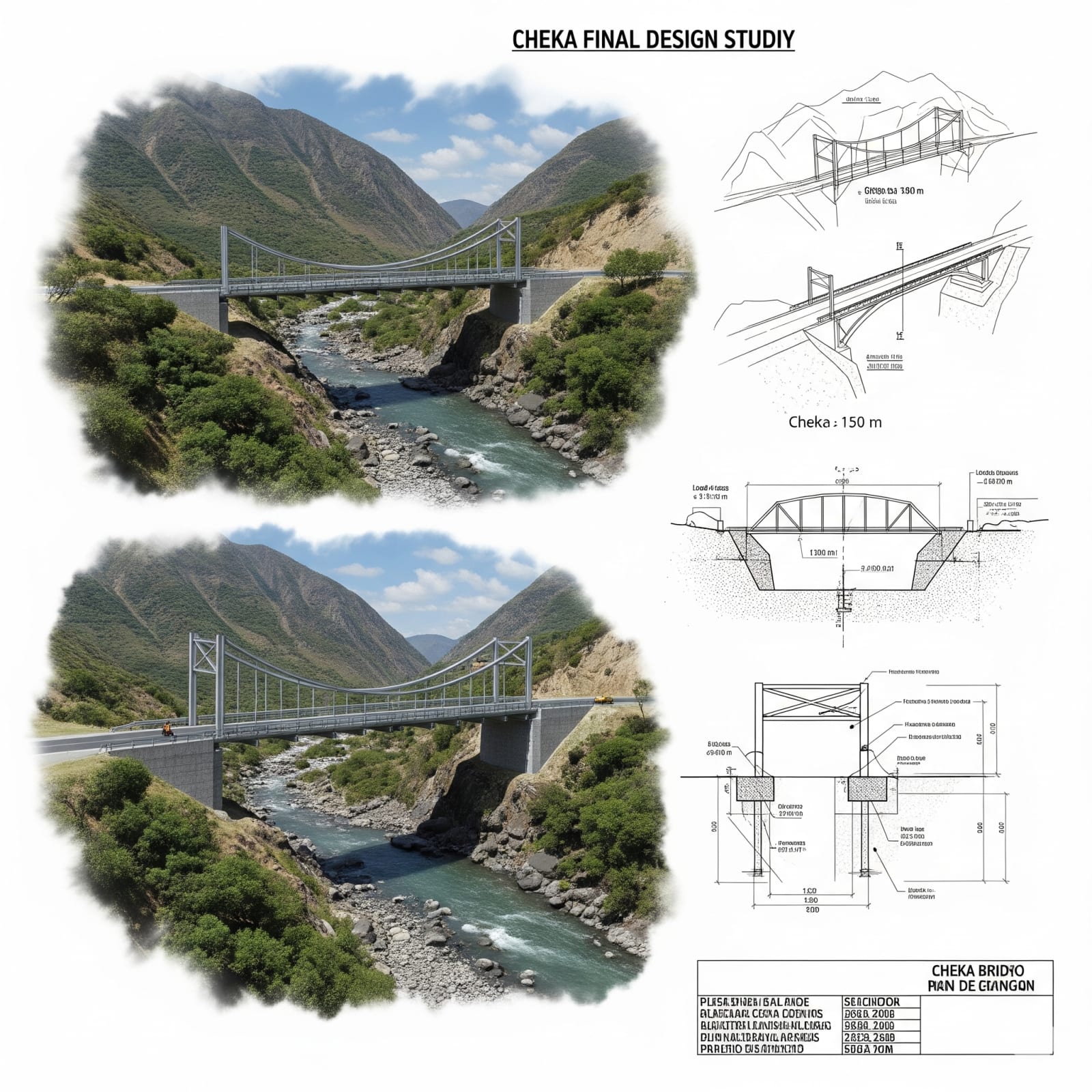
ESTUDIO A DISEÑO FINAL PUENTE CHEKA
Descripción General
El proyecto corresponde al estudio a diseño final del Puente Cheka, ubicado en el tramo carretero Chulumani – Irupana – Sacambaya, en la región de los Yungas del departamento de La Paz. El objetivo del estudio fue definir las características técnicas y constructivas necesarias para la futura ejecución de un puente de 70 metros de longitud, considerando las condiciones geológicas, topográficas e hidrológicas del sector. Características del Área: Zona de topografía montañosa con terrenos irregulares y pendientes pronunciadas. Región de clima tropical, con régimen de lluvias intensas y cauces con comportamiento torrencial. Condiciones geológicas complejas, con presencia de suelos inestables y afloramientos rocosos a profundidad variable. Para la formulación del diseño final del puente se llevaron a cabo los siguientes estudios especializados: Topografía, Geología, Geotecnia, (incluyendo perforaciones a diamantina hasta una profundidad aproximada de 15 metros, con el objetivo de alcanzar roca sana para la cimentación del puente), Hidrología, Hidráulica. Estos estudios permitieron determinar las condiciones del terreno, la estabilidad estructural, el régimen hídrico y los niveles de socavación, factores fundamentales para definir la tipología estructural y los criterios de cimentación del puente.
Galería
Área Técnica
Ingeniería Vial y Transporte
Tipo de Servicio
CONSULTORÍA
Ubicación
La Paz, Bolivia
Período
2012
ESTUDIO A DISEÑO FINAL PUENTE CHEKA
KRETCO S.R.L.
La Paz – Bolivia
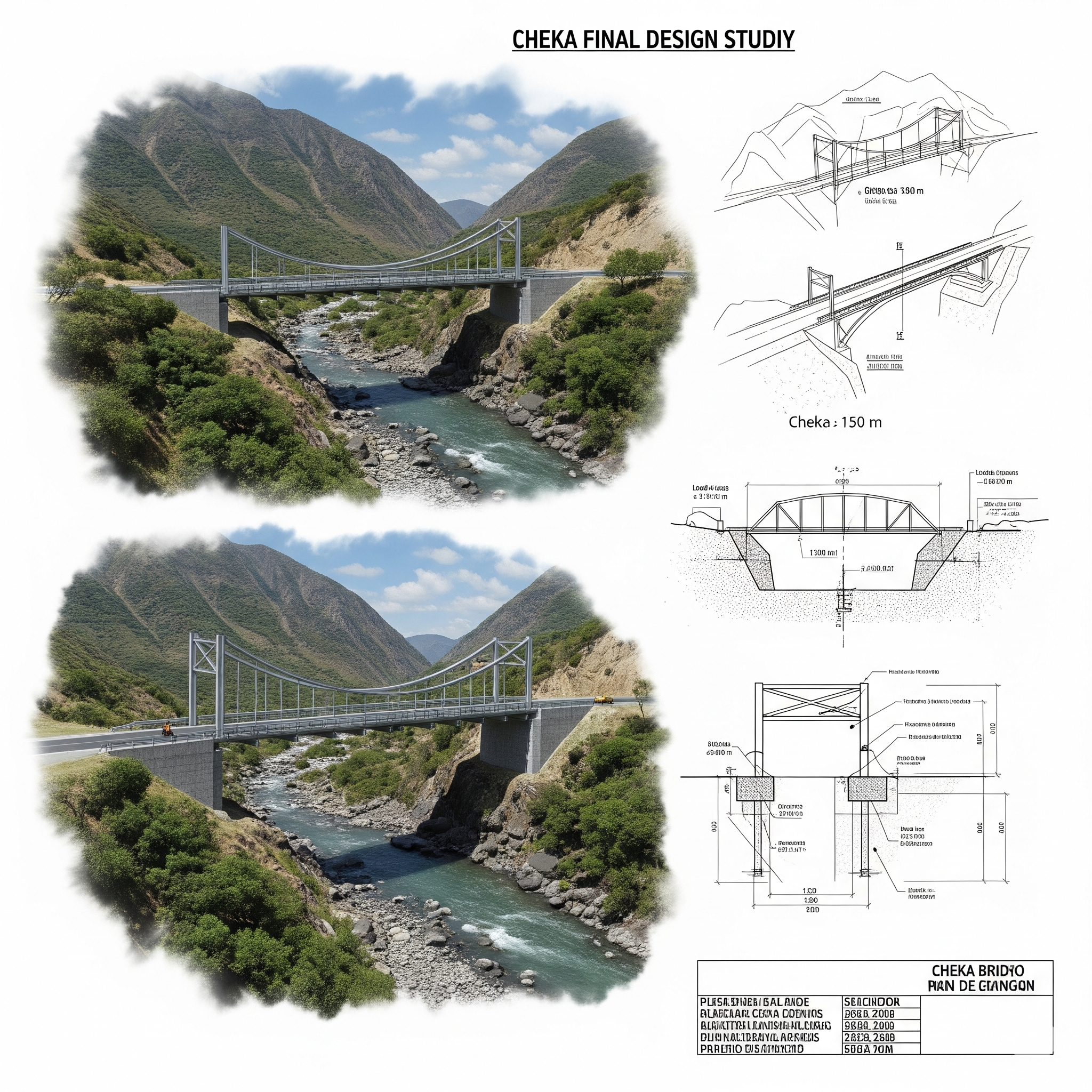
El proyecto corresponde al estudio a diseño final del Puente Cheka, ubicado en el tramo carretero Chulumani – Irupana – Sacambaya, en la región de los Yungas del departamento de La Paz. El objetivo del estudio fue definir las características técnicas y constructivas necesarias para la futura ejecución de un puente de 70 metros de longitud, considerando las condiciones geológicas, topográficas e hidrológicas del sector. Características del Área: Zona de topografía montañosa con terrenos irregulares y pendientes pronunciadas. Región de clima tropical, con régimen de lluvias intensas y cauces con comportamiento torrencial. Condiciones geológicas complejas, con presencia de suelos inestables y afloramientos rocosos a profundidad variable. Para la formulación del diseño final del puente se llevaron a cabo los siguientes estudios especializados: Topografía, Geología, Geotecnia, (incluyendo perforaciones a diamantina hasta una profundidad aproximada de 15 metros, con el objetivo de alcanzar roca sana para la cimentación del puente), Hidrología, Hidráulica. Estos estudios permitieron determinar las condiciones del terreno, la estabilidad estructural, el régimen hídrico y los niveles de socavación, factores fundamentales para definir la tipología estructural y los criterios de cimentación del puente.