
ESTUDIO TÉCNICO, ECONÓMICO, SOCIAL Y AMBIENTAL (TESA) DEL PROYECTO "SISTEMA DE ALCANTARILLADO SANITARIO Y PLANTA DE TRATAMIENTO DE AGUAS RESIDUALES (PTAR) DE SAN JULIÁN
Descripción General
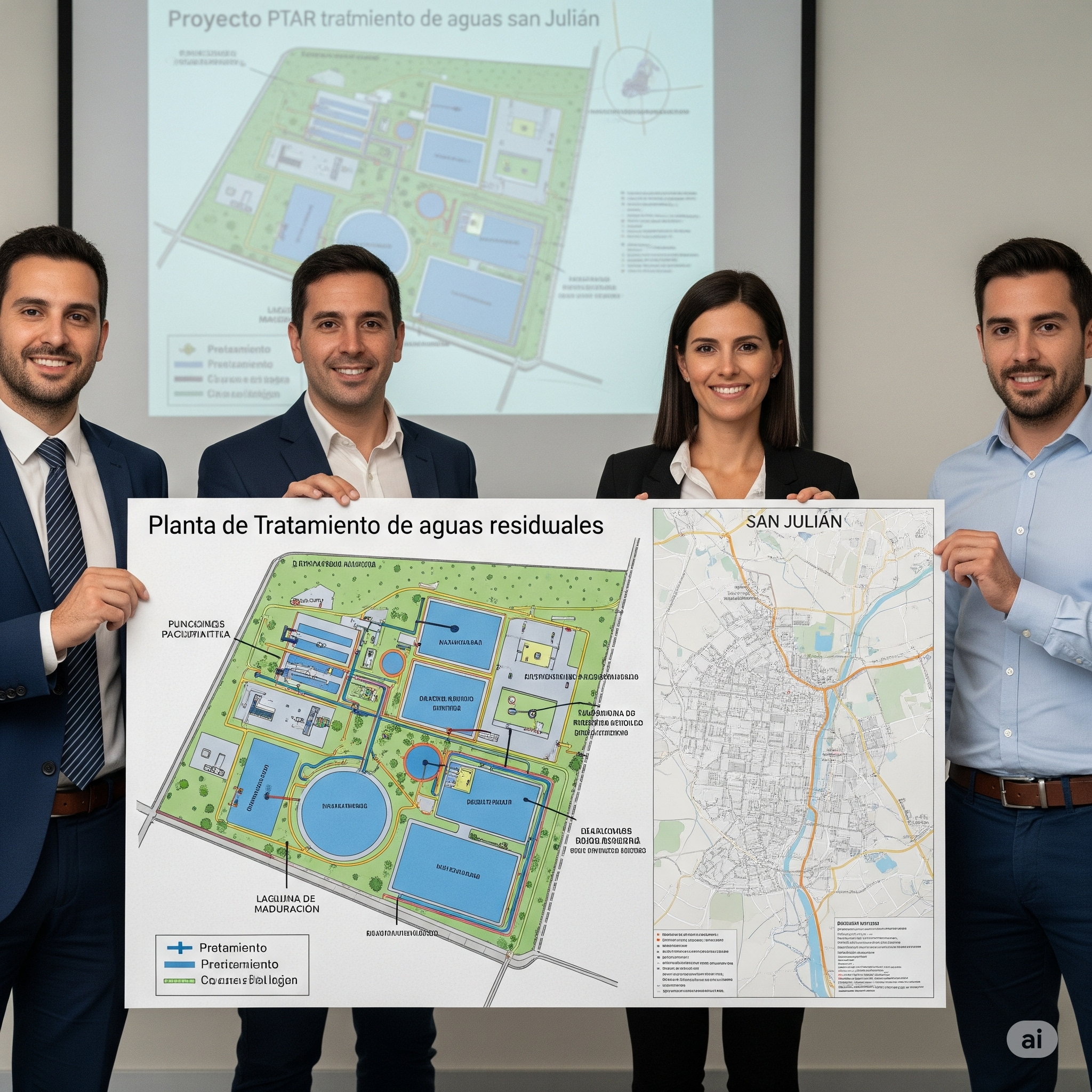
Este proyecto consistió en el desarrollo del Estudio Técnico, Económico, Social y Ambiental (TESA) en la que se realizó la implementación de un sistema de saneamiento básico integral para la población de San Julián, dada la inexistencia previa de servicios de alcantarillado sanitario y Planta de Tratamiento de Aguas Residuales (PTAR). Nuestra contribución técnica y estratégica abarcó: Diseño Técnico Detallado del Sistema de Alcantarillado: Se diseñó una red de alcantarillado sanitario con una extensión de 84.696,01 metros, incluyendo colectores. El sistema contempla 4.484 conexiones domiciliarias y la inclusión de cuatro estaciones de bombeo para optimizar el flujo de las aguas residuales. La infraestructura proyecta beneficiar a una población inicial de 20.781 habitantes (año 2016), con una capacidad de diseño para 29.503 habitantes para un horizonte de 20 años. Diseño y Características de la Planta de Tratamiento de Aguas Residuales (PTAR): Se diseñó una PTAR con un caudal de 94,45 litros por segundo (l/s), ocupando un área de 10 hectáreas. La PTAR fue proyectada para una población final de 35.154 habitantes para un horizonte de 30 años. La tecnología de tratamiento seleccionada es biológica con lagunas de estabilización, estructurada en las siguientes fases: A. Pretratamiento: Incluye cámara de entrada y By-pass, así como la etapa de pretratamiento y un distribuidor principal. B. Tratamiento Secundario (Biológico con Lagunas de Estabilización): Compuesto por una laguna facultativa y una laguna de maduración. Adicionalmente, se desarrollaron las estructuras auxiliares necesarias para la operación y mantenimiento eficientes de la PTAR. Análisis Integral de Viabilidad: Se llevó a cabo un estudio exhaustivo de viabilidad económica y social, complementado con procesos de consulta ciudadana para asegurar la sostenibilidad y aceptación del proyecto. El alcance del estudio también incluyó un componente de Desarrollo Comunitario y Fortalecimiento Institucional, esencial para la sostenibilidad a largo plazo del sistema de saneamiento. Plan de Gestión Ambiental: Se elaboró un plan robusto de mitigación ambiental, enfocado en la protección de los recursos hídricos locales y la minimización de impactos adversos. El diseño proyecta una reducción del 90% en la contaminación de los ríos locales y demuestra resiliencia frente a eventos de lluvias intensas (hasta 1.200 mm/año).
Asociación Accidental
Asociación Accidental TRAZAS-INCLAM-KRETCO
Galería

Área Técnica
Agua y Saneamiento
Tipo de Servicio
CONSULTORÍA
Ubicación
Santa Cruz, Bolivia
Período
2014 – 2015
ESTUDIO TÉCNICO, ECONÓMICO, SOCIAL Y AMBIENTAL (TESA) DEL PROYECTO "SISTEMA DE ALCANTARILLADO SANITARIO Y PLANTA DE TRATAMIENTO DE AGUAS RESIDUALES (PTAR) DE SAN JULIÁN
KRETCO S.R.L.
Asociación Accidental TRAZAS-INCLAM-KRETCO
Santa Cruz – Bolivia
Este proyecto consistió en el desarrollo del Estudio Técnico, Económico, Social y Ambiental (TESA) en la que se realizó la implementación de un sistema de saneamiento básico integral para la población de San Julián, dada la inexistencia previa de servicios de alcantarillado sanitario y Planta de Tratamiento de Aguas Residuales (PTAR). Nuestra contribución técnica y estratégica abarcó: Diseño Técnico Detallado del Sistema de Alcantarillado: Se diseñó una red de alcantarillado sanitario con una extensión de 84.696,01 metros, incluyendo colectores. El sistema contempla 4.484 conexiones domiciliarias y la inclusión de cuatro estaciones de bombeo para optimizar el flujo de las aguas residuales. La infraestructura proyecta beneficiar a una población inicial de 20.781 habitantes (año 2016), con una capacidad de diseño para 29.503 habitantes para un horizonte de 20 años. Diseño y Características de la Planta de Tratamiento de Aguas Residuales (PTAR): Se diseñó una PTAR con un caudal de 94,45 litros por segundo (l/s), ocupando un área de 10 hectáreas. La PTAR fue proyectada para una población final de 35.154 habitantes para un horizonte de 30 años. La tecnología de tratamiento seleccionada es biológica con lagunas de estabilización, estructurada en las siguientes fases: A. Pretratamiento: Incluye cámara de entrada y By-pass, así como la etapa de pretratamiento y un distribuidor principal. B. Tratamiento Secundario (Biológico con Lagunas de Estabilización): Compuesto por una laguna facultativa y una laguna de maduración. Adicionalmente, se desarrollaron las estructuras auxiliares necesarias para la operación y mantenimiento eficientes de la PTAR. Análisis Integral de Viabilidad: Se llevó a cabo un estudio exhaustivo de viabilidad económica y social, complementado con procesos de consulta ciudadana para asegurar la sostenibilidad y aceptación del proyecto. El alcance del estudio también incluyó un componente de Desarrollo Comunitario y Fortalecimiento Institucional, esencial para la sostenibilidad a largo plazo del sistema de saneamiento. Plan de Gestión Ambiental: Se elaboró un plan robusto de mitigación ambiental, enfocado en la protección de los recursos hídricos locales y la minimización de impactos adversos. El diseño proyecta una reducción del 90% en la contaminación de los ríos locales y demuestra resiliencia frente a eventos de lluvias intensas (hasta 1.200 mm/año).
Asociación Accidental TRAZAS-INCLAM-KRETCO